Month: August 2019

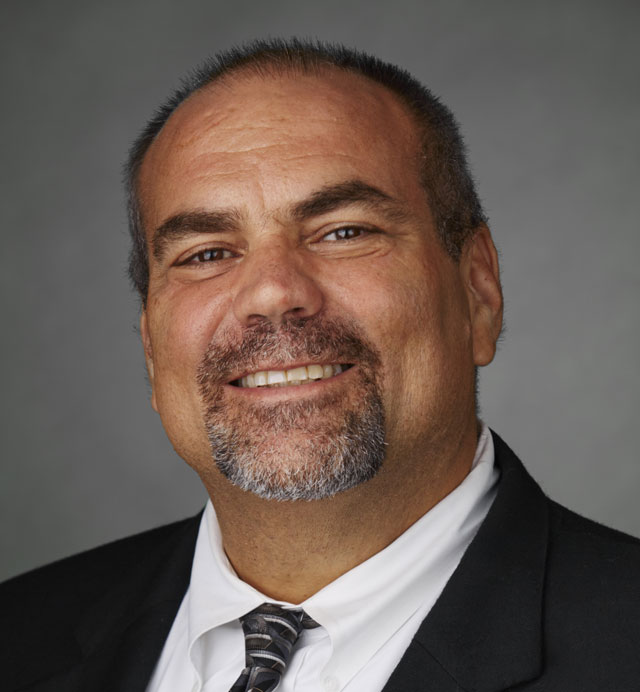
George Smith Partners’ David Pascale on why you should still refi while rates are low

Last year, there was a rush to refinance debt while interest rates remained low because most owners expect rates to increase this year. While rates did increase initially, the Fed has since shifted its policy and cut rates back again—but that doesn’t mean there is not need to continue to lock in low rates. David Pascale of George Smith Partners says that there should still be some urgency to refinance debt.

“With rates where they are now, if you can lock them in, there still should be some urgency, particularly on the fixed rate side,” Pascale, SVP at George Smith, tells GlobeSt.com. “Locking in a 10-year fixed rate loan at sub 4% is extraordinary, and even if the treasury and LIBOR are permanently low or are for a long time, credit spreads can be volatile.”

Read the full article: Why You Should Still Refi While Rates Are Low (GlobeSt.)

Detroit resident talks Impella, CPR and a “new lease on life”

After an unforgettable heart health scare, Lisa Cardillo looks back at the device that saved her life — and how to be better prepared for life’s unforeseen circumstances.

“With my condition rapidly deteriorating, [Dr. Ryan] Madder decided to implant the Impella CP, a small, temporary pump, to support my weak heart,” writes Cardillo. “The Impella CP pushes blood to the rest of the body to enable the heart to rest and recover. Two days after the Impella was inserted, my heart had recovered enough to function on its own, and the pump was removed.”

Read the full article: Heart attack survivor urges everyone to learn CPR (Oakland Press)

George Smith Partners’ Jonathan Lee on the current landscape for multifamily development

Regardless of the compelling growth in apartment rents, the current landscape for multifamily development does present challenges.

Nonetheless, developers and investors see potential in the recession-resistant multifamily sector, although not every opportunity pans out.

“We have seen major cities greenlight multifamily development, but because of the rising costs of labor and construction, coupled with long entitlement processes, the only projects that pencil out are the ones that command $3, $4 and even $5 per square foot in rent. Those are not rents that moderate-income renters can afford, so we are seeing a lot of money pouring into value-add buildings to bridge the gap,” says Jonathan Lee, principal and managing director of Los Angeles-based George Smith Partners Inc., a real estate capital advisory firm.

Read the full article: Steadfast’s New REIT Plans to Focus on Development and Renovation in a Tough Acquisition Environment (National Real Estate Investor)


CURE Pharmaceutical partners with Fytiko Farms

CURE Pharmaceutical reports on that it has signed a deal with hemp cultivation firm, Fytiko Farms. This partnership is projected to help the former expand its supply chain, as the latter will be tasked with providing them with high-quality, organic hemp material. With its uses, CURE Pharmaceutical will be able to better its proprietary Oral Thin Film (OTF) delivery system called CUREfilm®.

With CUREfilm®, the goal is to ensure that the delivery of drugs is optimized for patients. This is not just a matter of augmenting bioavailability, but also solubility and masking poor medicinal taste, all of which combined ensures full potential of drugs by hopefully reducing dose frequency and side effects.

Read full coverage:

CURE Pharmaceutical Attains Access to High Quality Hemp CBD Since Partnering with Fytiko Farms (Times of CBD)
Cure Pharmaceutical inks deal with hemp grower Fytiko Farms (Pacific Coast Business Times)

George Smith Partners’ Jonathan Lee on falling interest rates

Falling interest rates may have a positive impact on the construction finance industry, said Jonathan Lee, principal/managing director of George Smith Partners, as banks show more willingness to lend. Lee recently spoke with Loretta Clodfelter, editor of Institutional Real Estate Americas, about the latest construction trends.

“This is a positive development on multiple fronts for the construction industry,” said Lee. “In the last 12 months, the debt side lenders have continued to get more conservative by constraining their advance rates with debt coverage tests on exit NOI. It becomes more difficult for them to push exit underwriting rates as a precaution when the treasuries are dropping precipitously. From the perspective of debt, I foresee leverage holding firm.”

See the full article: Construction trends — lower interest rates, labor shortages (IREI)

The best approach to a podcast-friendly strategy. | eNews from OWC

In their cars and in their homes, people are drawn to the intimacy of audio. Podcasts are the new radio and have the on-demand appeal that consumers have come to expect. They’re more than just true crime and pop culture: business is now in the top five genres. The medium can’t be ignored.

Google recently announced that its search tool would begin to include podcast indexing. With searchability comes discoverability, and this translates to value for executives and brands seeking to raise their profile and boost their credibility as thought leaders.

The New York Times has launched “The Daily,” the Los Angeles Times partnered with Wondery to create “Dirty John” and NPR has more than a dozen podcasts, but traditional news media are only the tip of the iceberg. There are more than 700,000 podcasts right now and more than 29 million episodes. Listeners are literate, well-off, and podcasts are equally popular with men and women.

So, how do you get involved? Should you appear as a podcast guest? Should you go all in and launch your own? Here are three factors to consider when creating a podcast strategy to drive business objectives:

  1. Podcasts require commitment. When the importance of SEO (search engine optimization) became common knowledge, many companies turned to blogs to boost searchability. OWC advocates the use of blogs for more than just SEO; blogs offer compelling content that gives readers a reason to keep coming back. A podcast can do all of this too. However, like a blog, podcasts require the commitment of time to plan, book guests, record, edit and – most importantly – promote. In addition to the work of creating and producing a podcast, there is also a financial commitment. Buying the necessary podcast equipment to create a podcast that sounds professional will cost about $1,300. A pod studio might be in a storage room at the office, but it shouldn’t sound like it!
  2. Don’t reinvent the wheel; take a ride on someone else’s. If all the planning and spending causes second thoughts, it might make more sense to pivot and focus on being a podcast guest. As with traditional media, there will be “top-tier” podcasts (think “This American Life” and “Planet Money”) and more attainable goals (such as podcasts run by professional networks or groups that produce conferences). Make a commute less painful and listen to a few podcasts. Apple, Stitcher and Spotify make it easy; a search term of “leveraged loan” will return Debtwire, Bloomberg Radio and Financial Times episodes on the topic. Virtual assistants like Amazon’s Alexa can be told to play a podcast.
  3. PR teams should be pod pitching. A PR firm can easily integrate podcasts into the larger communications strategy, and media target lists can be adapted to include podcasts. When having communications and public relations planning meetings, there should be a discussion of the types of opportunities that are of interest (if there are specific goals, communicate those as well). Preparation for a podcast interview is not unlike preparing for a traditional broadcast interview, but perhaps less daunting since the focus will be on the spokesperson’s words and not their appearance.

Unlike traditional media, where the number of subscribers and web traffic info is readily available, podcasts are notoriously tight-lipped on these details. Whether you decide to guest or host a podcast, the most important thing to consider is whether the activity is making the phone ring.

Give us a call if you want to discuss. We’re here, pitching and listening to podcasts.

Retina on Madison Reed and customer lifetime value

Knowing how valuable someone will likely be to a brand over time lets the growth team calculate how much it’s willing to spend to attract that customer, and create targeting segments that are better pegged to overall ROI.

For the last two years, Madison Reed has been working with a startup called Retina that helps companies build look-alike audiences based on their predicted LTV, by crunching a brand’s first- and third-party data on a daily, weekly or monthly basis to score customer relationship profitability and what types of customers are most likely to retain.

Look-alike audiences are often modeled off of lists that include customers who are about to churn or maybe only purchased a single product and then never returned, which doesn’t make a lot of sense, said Retina CEO Michael Greenberg.

Madison Reed is running tests using LTV data to power its look-alike modeling on Facebook, and the results have been encouraging, Kalinowski said, with a roughly 50% increase in ROI in some cases. The company plans to keep scaling its tests.

Read the full article: Madison Reed Enriches Its Data Strategy With A Focus On Lifetime Value (AdExchanger)

Abiomed’s Dr. Shon Chakrabarti on how doctors really feel about data from your Apple Watch, Fitbit

There are mixed reviews from doctors on how patients gather and present information from the latest tech gadgets. Some say it’s a plus that patients can collect and curate more health-related data than ever before. However, it’s best to leave printouts of calories burned and counted steps at home during your checkup.

“As clinicians, it can be challenging because these tracings are not very clear. Some can be challenging to interpret. Other times, patients may really inundate (staff) with a lot of tracings to look at,” said Shon Chakrabarti, an interventional cardiologist and medical director at Abiomed, which manufactures medical devices for people with heart problems.

What doctors do care about is streamlined data integration and information that is clinically actionable, Chakrabarti said. Patients who come into the office with accurate and reliable data about their underlying condition or symptoms could speed things up during medical emergencies.

Read the full article: How doctors really feel about data from your Apple Watch, Fitbit (USA Today)

George Smith Partners’ David Pascale on the Fed’s recent rate cut

Don’t expect the Fed’s recent rate cut to shake up the market too much. Interest rates have remained low for the last several years and with compressed cap rates throughout California and the nation, investors won’t likely rush into new transaction simply due to the rate cut. At the moment, fundamentals are driving investment decisions more than rates.

“Fundamentals are front and center right now,” David Pascale, SVP of George Smith Partners, tells GlobeSt.com. “Because cap rates are so low, a lot of deals are dependent on increasing income and blue-skies in the future. A project has to pencil on its own, and investors aren’t going to jump into a transaction because rates are low. Rates have been low for a long time.”

Read the full article: Fundamentals Supersede Fed’s Interest Rate Cut (GlobeSt.com)