Month: May 2021

The Five Key Insights For Getting Local Broadcast Coverage | eNews from OWC

The quarantine revealed local broadcast news to be one of the most valuable and engaging sources of information on critical issues, including the regional interpretation of the latest CDC guidelines. But it’s not just Covid news that flexed broadcast power: Four out of five U.S. adults (83%) trust their local news stations over national network news (78%) and cable news channels (71%), such as CNN, Fox News and MSNBC.

With numbers like that, businesses need to get creative to attract local broadcast interest and focus on making their story broadcast quality:

News relevance: Measure how the story is relevant to the current news cycle and what’s impacting the community. People are making decisions about back to school and work, personal finance, inflation concerns, property values and climate issues. Can the business fit into those stories?

It must be visual: A broadcast story is de facto visual. We want to look at what a camera crew will need to film to tell the story. A camera-ready spokesperson may be needed or even better, customers. Customers are the most compelling spokespeople for a business. Even a minor celebrity appearance at an unveiling can be a draw and young, inquisitive children at an outdoor activity with music and giveaways offer visual interest. All the facts needed will be available in a press kit, from fact sheets, press releases, executive bios, along with an “anchor read” so an in-studio anchor is prepared to introduce footage accurately.

Planning … Calendars, film crew schedules, competing events and more: What other news or events will compete with the story? Be realistic about how news media will perceive what’s important. We look for “slower news” days anticipating what’s playing out on the news that week. Friday mornings are a good time because broadcast looks for lead-ins to the weekend with feel-good or fun stories. Relentless media follow-up and continued reconfirmation is critical to success because every story is competing for the same airtime, not including breaking news. We are vigilant about ensuring our client’s event is on the station’s planning calendar.

Run-of-Show: A schedule that tells company personnel what to do, where to go and how to approach every moving part of a fast-moving opportunity is the run-of-show. It ensures the communication process is seamless, camera subjects are ready, and reporters’ needs accommodated. Be a resource to reporters, but then give them their space because they know how they want to cover this story. Successful planners know everything will not go as planned. They know that news crews can be pulled away without warning for breaking news, but the run-of-show gives us a roadmap of what we hope will happen.

Capture, report and promote: The whole reason for local broadcast events is to engage with the important trusted audience and deliver on marketing goals. So, we want to capture this news and spread it far and wide on social channels, post on the website, share with customers, employees and investors. Many stations post their coverage online, especially if a reporter was at the press event to cover the story. If they don’t, clipping services such as DigiClips and Metro Monitor perform wide tracking and can outline key figures like viewership to determine ROI and the success of a campaign. While there may only be one news clip, the story may have run a dozen more times in syndication. News clips of coverage can and should be purchased, because although they live only momentarily on TV, such authentication can have an indefinite lifespan on the company’s website, social media and marketing programming.

Earning local broadcast media coverage requires knowing when and how to present a company’s story, and it takes persistence and a touch of hard-won luck. The reward is a measurable impact on community, reputation and the bottom line.

Our team can consult on strategies to participate in the flow of local news all around us—to see and be seen, and to matter.

OWC Talks Going Back to the Office in LA Times

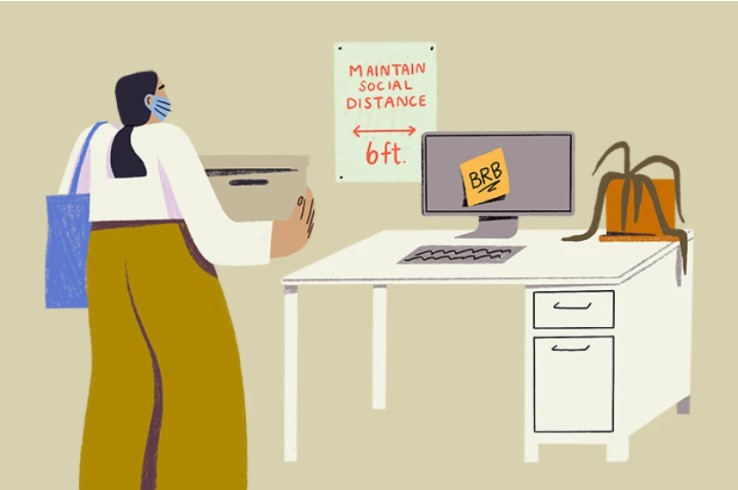
The Los Angeles Times ran articles on businesses preparing to take their employees back to the office setting. After over a year of working from home, company leaders are trying to navigate how to transition employees who are now settled in the “work from home” way of life.

Some businesses aren’t making their employees go back if they don’t want to, others are seeing the hybrid online and in-person way of work as the new normal.

OWC CEO Tracy Williams was interviewed on her thoughts for getting her company to go back to the office.

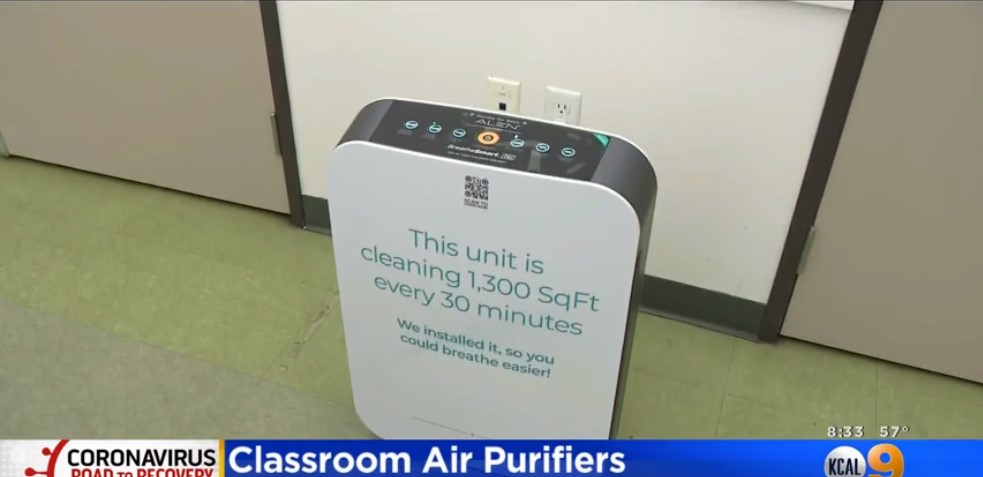
She told The Times that although her eight-person firm has not yet returned to the office full-time, she installed Alen Air purifiers in the 12th-floor suite in Westwood last month to eliminate 99.9% of particulates in the air.

“We’ll have the cleanest air in the building,” said Tracy Williams, president and chief executive. “But do we still need seven offices and a conference room with a view? Frankly, I don’t know. It’s one of the big questions for every business.”

OWC Senior Associate, Paulo Acuña, revealed that he had a more formal return to work one day in April to complete a project with several employees, though he is otherwise still working from home. He stated that the experience was altogether strange.

“I can’t really decipher what it was like — if it was good or bad,” Acuña said. “It was weird. It’s been a long time since we’ve been together.”

Acuña was met with a large pile of subscriptions he decided to leave for another day. One thing he did do was keep his mask on, even though he could have closed the door to his office and taken it off. That wasn’t something he contemplated doing even though there were only a handful of workers in the office.

Read the full articles here: L.A. employers are preparing for your return. Here’s how and The first day back at the office might feel weird. Really weird

INSIDER interviews Amazon third party seller on getting into the business and selling to Elevate Brands

In the Amazon seller space, Josh Dittrich, 36, is one of the more veteran players. By his reckoning, he’s been working in the category since approximately 2009 — unless you count his brief turn as a fitness mogul.

“I remember the very first experience I had was in 2006-07,” he told Insider. “I sold 40 P90X [fitness systems] overnight, and I was tickled pink that I made all of this money. I’ve always been sort of a dabbler in the ecommerce space as far back as I can remember.”

The opportunity on Amazon was clear to Dittrich, and after a while, working on one line of products wasn’t enough. He started a side hustle in 2016 to sell merchandise in a wide variety of Amazon categories, figuring he could apply the knowledge base he’d acquired in developing this sales channel in one niche to selling on the retail platform full time.

After roughly two years, Dittrich was able to go all-in on his new venture, and now he’s selling out to Elevate Brands for a structured deal that will be worth more than $10 million, assuming that his company hits a few key performance indicators.

Elevate Brands acquired the company with visions of great expansion in the coming years.

“We felt that Josh’s company had a lot of upsides in that we felt that we could dramatically improve sales by giving many of their products a new look and feel, and our marketing team is very excited about that,” Ryan Gnesin, CEO at Elevate Brands, told Insider, adding that his company plans to add sustainable packaging and may sign on influencers to endorse some of the products.

Read the full article: An Amazon seller cold-called dozens of firms to buy his company, and now is selling it for more than $10 million. Here’s how he did it.

Three Easy Ways To Measure the ROI of Public Relations | eNews from OWC

How does public relations compute the value of a PR campaign? We use a proven mix of KPIs, including website hits, brand impressions, sales, investor sentiment, ad equivalency and share of voice to establish the short-term and long-term profitability of a campaign.

OWC was founded on the belief that the metric that resonates most for high-growth tech and financial services companies is customer growth and engagement. Today, 13 years later, how customers feel about and engage with your brand is still what matters most.

Accurate measurement is knowing what to measure, and every PR campaign has its own goals and targeted outcomes. For example, an initiative to educate the market and build brand awareness has a different target than one focused on crisis communication designed to diffuse an issue. Here are three simple ways to measure ROI of a PR initiative:

Improved Sentiment – PR should set out to build a reservoir of goodwill and positive response from media, customers and the community. Sentiment directly translates to how the brand is perceived and supported by its audience when reputations get bruised or an industry-wide shake-up causes collateral damage. As an example, one client (see story here) donated its air purification systems to a local charter school, and OWC created a demonstration event for media, building goodwill within a highly influential market.

Quality of Leads – The best testament to a successful PR campaign is that one call from the next big client, customer or partner. In some cases, the call changes the trajectory of the business. One New York Times story (case study here) brought a young start-up company its largest customer, tripling its business. Successful public relations translates into increased sales, new business opportunities and easier recruitment of top-tier talent.

Quantifiable Results – Numbers matter. A couple of news articles are good, but a creative campaign generates dozens, and this heightened interest is used to secure top-tier speaking opportunities, podcast invites and coverage resulting from that. It becomes a virtuous cycle of opportunity. For instance (case study here), creative pitch angles generated 200 stories in two weeks for an innovator in videogame technology. The news angles made them relevant to the TEDx Manhattan Beach producer, leading to a well-viewed talk by the company CEO, further solidifying the company as an innovator in the market.

Everything a company is doing, from new hires and product launches to its research and analysis of a market, is fodder for an ongoing public relations campaign. Each campaign should start by tying public relations results to business lead generation, high bar opportunities like a prime speaking opportunity and overall improved sentiment among its customers, community and media.

Being held to measurement criteria isn’t a hardship, it makes PR more relevant and exciting.


All the best at 5’4”,

Tracy

Olmstead Williams Communications

CEO and Founder

w 310.824.9000, c 310.387.7738

Leonardo247 CEO featured in Forbes on Property Insurance Costs

Recent news coverage around the struggles facing multifamily real estate owners centers on rent moratoriums, which were extended to June 30, 2021. These are proving to be a significant risk to the industry even with rental assistance. However, there’s another more subtle threat that is also eating away at profitability: rising insurance costs.

Premiums for the multifamily sector for both property and liability insurance have not only increased more than any other real estate market, but they have also risen at rates (10%-40% for the past two years) that haven’t been seen in more than a decade. In addition, insurance carriers are shifting the liability risk to apartment owners by asking them to carry more of the financial exposure by dramatically increasing deductibles and self-insurance limits. In the insurance industry, rates have been trending upward for a few years now, and most industry experts expect these trends to continue in 2021.

Read the full article: Skyrocketing Property Insurance Costs: How To Mitigate Your Risks

Elevate Brands was featured in Forbes on what Investors are Looking For

One of the hottest types of businesses to sell right now are e-commerce stores that do business on the Amazon platform. While investors used to overlook these one-or two-person third-party sellers, now some in the investment community have recognized that the best-run among these shops can be very profitable and that aggregating a stable of them and managing the back end of the businesses for greater efficiency can allow backers to create a very profitable juggernaut.

“2020 is the year it became popular to start buying Amazon businesses,” says Ryan Gnesin, CEO and majority shareholder of Austin- and New York City-based Elevate Brands (formerly Recom Brands). It was only around 2018 that Amazon allowed someone to own multiple accounts, Gnesin says.

Read the full article: Investors Are Beating The Bushes For E-Commerce Stores That Sell On Amazon—Here’s What They’re Looking For