Month: October 2026

The Real Value of a Newspaper Story | eNews from OWC

AI has raised the value of a newspaper story. News articles make up more than a quarter of the sources ChatGPT, Claude and Gemini cite, according to Muck Rack’s What Is AI Reading? study. A company can post on Instagram or LinkedIn for free, so what is a newspaper story actually worth?

The answer comes down to impact, and here’s how earned media delivers it.

  • Media coverage reaches beyond a brand’s followers. An Instagram post for a business or a thought leadership post on LinkedIn mostly reaches people who already follow the company, and few of them see it. Socialinsider data shows roughly 95 of every 100 Instagram followers never see a typical post. A news placement puts a company directly in front of an outlet’s audience, including prospects, partners and investors who have never heard of it.
  • Earned placements have staying power. A social post slides out of the feed within days. Boosted reach ends when the ad budget does. A news article stays on the outlet’s site and surfaces in search results for years. Media hits are useful for sales conversations, proposals, its website and newsletters, adding value with every use.
  • Third parties build trust. Audiences read a company’s own social content as advertising. Earned coverage passes through a reporter and an editor and carries the outlet’s name, which gives prospects the outside validation they want when misinformation worries them. This validation matters more as feeds fill with AI-written posts and fake profiles.
  • AI reads the news. LinkedIn accounts for nearly 1 in 8 social media citations in AI searches, so a CEO’s thought leadership posts help. News articles appear far more often. An article quoting that CEO carries the most weight, placing the company in AI answers through a trusted outlet.

Social media keeps a company in front of its followers. Earned media reaches new audiences, builds trust, and puts a company’s leaders in the answers AI delivers. That combination turns visibility into new business.

IN THE NEWS

Impella patient featured on Fox 10 Phoenix

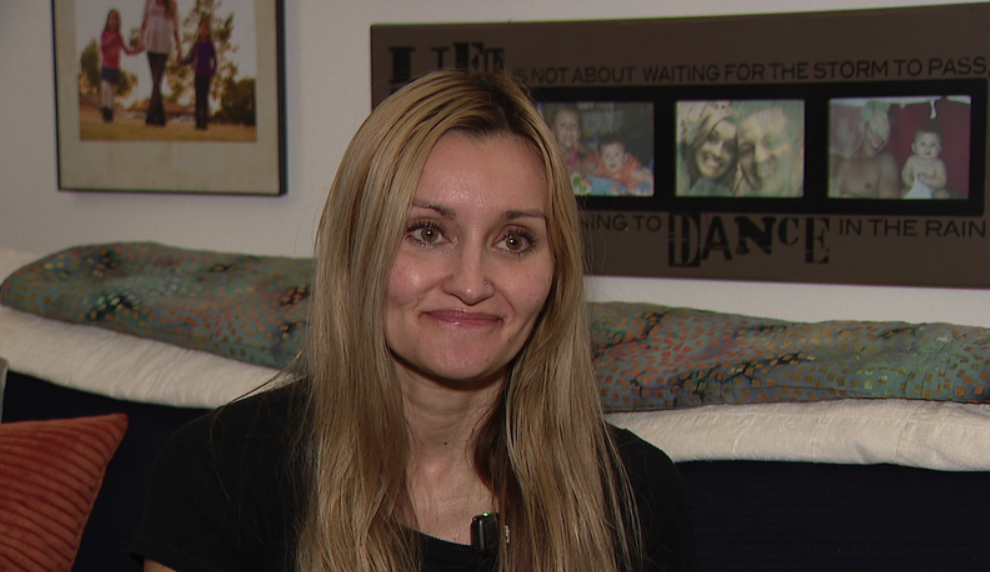
Brooke Mikutowicz was spotlighted on FOX 10 Phoenix following her one-year anniversary of a heart event that changed her life. Doctors placed an Impella in Brooke, allowing her heart to rest, while the device pumped blood and nutrients to vital organs. Read the full story here.

San Diego Business Journal spotlights Nuvve

The San Diego Business Journal recently covered the launch of Nuvve’s AI-powered forecasting platform that helps battery operators and utilities better anticipate energy market conditions, optimize the use of stationary battery assets and strengthen grid resiliency. Read the full story here.

ICYMI: Talk PR with Tim Schneider

Tim Schneider has brought back to life the Palisadian-Post, the area’s local weekly newspaper which previously folded. On last month’s Talk PR, Schneider discussed the economics behind local newspapers, content development, and how the Palisadian-Post rebuilds alongside the community. Watch the full interview here.

CoStar News spotlights Lowe executive and San Diego projects

Commercial development veteran Todd Majcher brings a perspective beyond the United States as he leads a mixed-use overhaul of a popular but aging San Diego mall in the city’s center.

Majcher was born in Vancouver, British Columbia, and raised in Victoria on Vancouver Island. Majcher said his pre-career life in Canada and the United Kingdom provided inspiration for his 21-year tenure with Los Angeles-based Lowe, a national developer of commercial, residential and mixed-use properties.

While living in London, “I was fascinated by the city’s diverse neighborhoods and the way great places evolve over time,” said Majcher, senior vice president and regional leader at Lowe.

“What stood out to me was how certain communities had a strong sense of identity and place, where the streets, public spaces, architecture and daily activity all came together to create something memorable,” he added. “It made me appreciate the impact the built environment can have on people’s lives.”

That initial spark of interest led Majcher to study landscape architecture at the University of British Columbia in western Canada, where he focused on design theory, placemaking and how the physical environment shapes community experience.

Majcher followed his college work with a four-year stint as a project manager at DesignWorkshop in Jackson Hole, Wyoming. He joined Lowe in 2005 and has since held several executive positions.

“I began my career as a designer and loved the creative process, but over time I found myself increasingly interested in the broader decisions that drive development,” Majcher said. “As a designer, I often felt frustrated by how little influence I had over the ultimate vision, economics and execution of a project.”

His work at Lowe has helped him “bring all the pieces” of development together, and he’s deploying those in an extensive reconfiguration of a 65-year-old, open-air San Diego mall formerly known as Westfield Mission Valley East.

Lowe and Colorado-based investment firm Real Capital Solutions purchased the mall in 2023. The new owners renamed the center The Valley and began work in 2025 on a planned multiphase redevelopment, with work now nearing completion on the first new elements, including public promenades and gathering spaces, wayfinding signs and expanded dining areas.

Earlier this year, Lowe announced the signing of several new tenants including the first California location for Dick’s House of Sport, an experiential-focused version of the sporting goods chain in a space formerly occupied by Macy’s.

For future phases of The Valley, plans are in the works to replace some parking areas with at least two residential buildings that could include up to 650 apartments. Majcher said the development team is aiming to create a place that brings “decades of relevance,” not merely meeting today’s market conditions.

What was the biggest challenge you faced in redeveloping the San Diego mall property, and how did you resolve it?
The central challenge was transforming an aging and somewhat outdated regional shopping center into a modern mixed-use destination through thoughtful design interventions that reflect not only San Diego’s context and culture but also reveal the project’s original 1960s midcentury vernacular.

Throughout this process, we remained flexible while staying committed to the long-term vision. Working closely with the city of San Diego, our design and construction partners, and retailers, we phased improvements, adapted plans as needed and balanced near-term realities with long-term value creation.

What keeps you up at night?
What concerns me most is the growing gap between the demand for new development and the ability to economically deliver it. Across the country, we’re seeing higher capital costs, inflationary construction pricing, labor shortages and longer permitting and entitlement timelines. Together, those factors make it increasingly difficult to bring transformative projects to market.

At the same time, communities need new housing, jobs, infrastructure and places that create economic vitality. The challenge for our industry is finding ways to continue investing despite those headwinds. That said, I’ve learned that great projects tend to endure through economic cycles.

What career advice would you give to someone just starting out in the real estate business?
My advice is simple: Be curious, be patient, and spend time understanding every part of the business, but most of all do something that you enjoy with people that you like. Additionally, pay close attention to the regional vernacular and context of the community in which you are developing.

Real estate is one of the few industries where finance, design, construction, operations, public policy and community engagement all intersect. The more perspectives you understand, the more effective you’ll become. I would also encourage young professionals to spend as much time as possible in the field. Walk properties, visit construction sites, meet tenants and talk with the people who operate assets every day.

One lesson that has stayed with me throughout my career is that real estate is driven by having a strong vison, integrity and relationships.

Read the full article: Developer brings global inspiration to redevelopment of San Diego mall

Fox 10 Phoenix Spotlights Impella Patient

An Arizona woman is urging women to advocate for their heart health one year after cardiovascular disease nearly took her life. Thanks to an Impella device, she is alive today and sharing her story.

Who She Is: Brooke Mikutowicz is all smiles as she celebrates a birthday unlike any other.

“My one-year anniversary of life again. I was reborn my 1-year birthday yesterday,” Mikutowicz said.

She is celebrating with the ultimate present of being alive.

“Just braiding my daughter’s hair in the morning is like, I can be overwhelmed with just emotion to think, wow, I can’t believe I get to be here for something so small like this. And I get to do this for her, for her life. That I wouldn’t be able to do,” Mikutowicz said.

The backstory: It was just one year ago, on Sept. 27, the mother of three daughters went to lay down when her heart sped up.

“It was an extremely fast rhythm,” Mikutowicz said. “Kind of curled into a ball and asked Jesus to save me. And then I woke up four days later in the hospital not having any recollection of anything that had happened.”

Her husband Zac had called 911, performing CPR until help arrived. Dr. Akil Loli at the Abrazo Arizona Heart Hospital says when Brooke came in, they immediately had to determine what caused her heart to stop functioning.

What they’re saying: “She was a healthy young lady going about her life and raising her children when all these symptoms occurred. So it wasn’t clear at the time,” Loli said.

“They were pretty much telling him to prepare for the worst and that I probably wouldn’t make it through 72 hours. And then if I did make it, I would probably be brain-dead,” Mikutowicz said.

The Heart Device: Doctors put an Impella in Brooke, allowing her heart to rest, while the device pumped blood and nutrients to vital organs like the brain and liver. Within two days, Brooke was making a miraculous recovery. Doctor Loli says the Impella has helped cardiovascular patients avoid kidney damage, brain damage, and possibly death.

“To basically reduce our mortality rates in patients of cardiac shock, it has been in a word: God sent,” Loli said.

Thanking Her Doctors: Brooke recently got to thank Doctor Loli and the Impella team in person.

“It’s just amazing to be able to see them face to face. It’s almost like looking death in the eyes, you know, and getting to see them look at me and me look at them and be like, wow, I get to be here today because of all of your guys’ work,” Mikutowicz said.

Why you should care: In light of her story and World Heart Day on Sept. 29, Brooke and Doctor Loli are reminding women that cardiovascular disease symptoms can look different in women than men, and can be fatigue, heartburn, or even preeclampsia, like Brooke had during her first pregnancy.

“If you feel there is anything whatsoever that just doesn’t seem right, just get yourself checked out because it could literally save your life,” Mikutowicz said.

A second chance at life, Brooke never takes for granted.

Read the full article: Arizona woman celebrates one year of life after surviving cardiovascular disease

Nuvve’s AI-Powered Forecasting Platform Featured in San Diego Business Journal

Renewable energy batteries are only as good as how intelligently their supply is deployed.

According to the non-profit research and advocacy organization Institute for Local Self-Reliance, a 2019 investigation of electric energy forecasts from seven of the country’s 10 largest utilities found that the average forecast overestimated demand by nearly 20% over a three-year span.

Grid modernization and electric vehicle charging tech company Nuvve Holding Corp. (Nasdaq: NVVE) is aiming to help battery operators and utilities plan better for energy market fluctuations, optimize the use of their stationary battery assets and improve grid resiliency.

Nuvve launched an artificial intelligence-powered forecasting platform this month that analyzes an assortment of data sources including weather, grid activity, outages and other factors that influence energy supply and demand.

The platform focuses primarily on the prior week to produce its forecasts of the following two weeks, identifying the most valuable times to charge and discharge batteries, according to Nuvve co-founder and CEO Gregory Poilasne.

“U.S. utilities are really struggling with load forecasting; very often they don’t even know what’s connected to their system, so they were expressing a lot of interest into load forecasting,” he said. “We started to work on it and look very closely and we saw that there is a window of time nobody is working on.”

The platform provides energy price forecasting, battery performance benchmarking relative to forecasted optimal deployment strategy, continuous data monitoring and insights into the factors behind forecasts and recommendations.

Battery and utility operators can also prompt the platform with hypothetical scenarios about changes in temperature, market conditions and other factors that could affect battery storage and deployment as well as revenue.

Overseas, Domestic Market Interest

Nuvve has already made the platform available for production use for its own battery portfolio and for select customers in Europe. The company will then expand the platform’s availability to its customers in Japan.

The company is also developing load forecasting capabilities for the U.S. energy market and has secured three contracts with domestic operators, according to Poilasne. U.S. utilities are also more interested in on-site forecasting technology than Nuvve’s international customers because of cybersecurity concerns.

“Forecasting these things really help get the resources ready so that whatever event is going to happen, it’s still going to be under control,” Poilasne said. “It’s going to be more expensive, there’s no question about that, but it will still remain under control.”

Through its subsidiaries, Nuvve has increased its focus on the European and Japanese markets relative to the U.S. because of their increased acceptance and interest in renewable energy and electricity storage.

That’s due in part to the need for companies like Nuvve to negotiate directly with individual utilities across the U.S. as opposed to a single national energy provider. Earlier this year, Nuvve announced a partnership with the city of Socorro, New Mexico, to design and engineer a utility-scale battery energy storage system to help modernize and improve reliability and resilience for the city’s energy grid.

In addition to the three U.S. utilities already under contract, Poilasne said he anticipates Nuvve contracting with another three or four domestic utilities for load forecasting capabilities by the end of the year.

Poilasne noted that the vast majority of the time, 90-to-95%, energy market forecasting will be relatively static on a day-to-day basis.

However, platforms like Nuvve’s are built for the remaining 5-10%, when ensuring that operators have the correct amount of energy capacity stored is critical.

“There’s enough things you can track very closely in order to predict prices and how those prices are going to change, especially when you look at history and you bring it back to what you’re observing right now,” he said. “So you’re not trying to predict tomorrow, you’re really trying to predict the next big event that’s going to be impacting the price.”